

Where we are right now in automation... vs. the future
Self-driving Cars and the Future of Transportation.
Will I Ever Own a Fully Automated Vehicle?
The leap to owning a fully automated vehicle will not be like the leap from horse and buggies to “tin lizzies.”
Many estimates predict that we will see fully automated vehicles in the next couple of years. But whether the average person will be able to afford one or want to drive one is another question.
The likely first purchasers of these vehicles may be fleet operators that buy vehicles in bulk quantity. A car rental company might, for example, have “geo-fenced” cars that might serve the metropolitan area around an airport and go no farther.
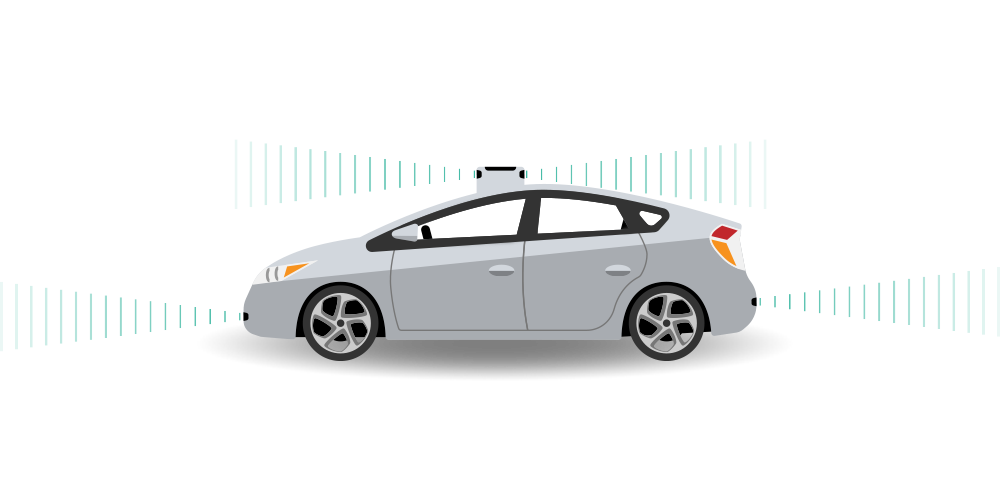
Rideshare companies such as Uber are already experimenting with automated driving systems and may render that chatty, affable driver a thing of the past.
In this article, we look at some of the resistance to automation, and how it may be overcome.
Can Fear of Assistive Technologies Be Overcome?
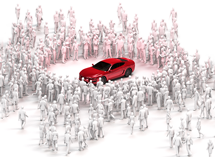
New technology can be intimidating, especially when it is so different from anything previous experienced. According to a AAA survey in 2025, about three in five Americans report feeling too scared to ride in an autonomous vehicle, with only 13 percent saying they would trust the driverless technology. Improving safety is the top concern of survey respondents. There are clear demographic divides when it comes to confidence in automation, with Americans under age 50 twice as likely to want to ride in an AV than their older counterparts, and men far more keen on the idea than women are.
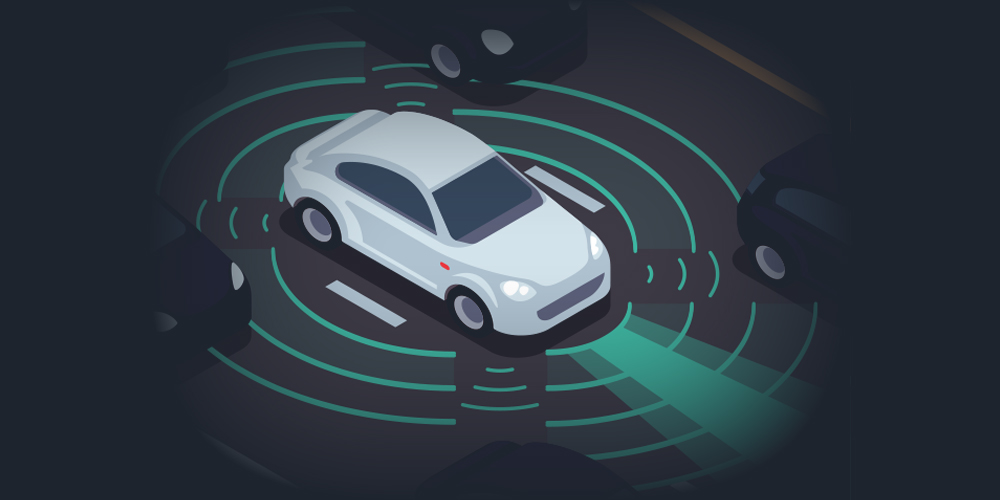
Who’s Afraid of a Fully Automated Car?
A University of Michigan study showed that, “In comparison to the respondents in the U.K. and Australia, respondents in the U.S. expressed greater concern about riding in self-driving vehicles, data privacy, interacting with non-self-driving vehicles, self-driving vehicles not driving as well as human drivers in general, and riding in a self-driving vehicle with no driver controls available.”
As Level 4 operations expand and more data becomes available, some of the fear of the unknown may dissipate. JD Power found that 76% of respondents who rode in a robotaxi felt positive about the vehicles, as opposed to 20% of those who had not tried for themselves. Now, whether this is cause or effect is unclear – people who feel more favorably towards AVs are more likely to want to ride in one in the first place. However, among non-riders in cities where robotaxis were operational, favorability increased as well.
How Soon Will We See Them?
Is resistance futile? According to some projections, fully automated cars will be common in 20 years. In a controlled experiment, a partially automated beer truck made a delivery without a driver behind the wheel for the highway portion of the trip. Once the beer truck entered the city, a truck driver took over driving duties.
But will fully automated cars erode the aspirational driver experience on which so much of car marketing is based? There was a scare a few years back when a University of Michigan study showed that fewer younger people were getting licenses. Fewer drivers mean fewer car purchases. But that proved to be a temporary phenomenon as millennials were second only to boomers with 4 million cars purchased in 2015.
Whether or not America’s love affair with the automobile is the product of strong marketing, the next generation of drivers may be more concerned about what they can do with the extra time they’d have if they don’t have to pay attention to the road.

The conventional wisdom has been that younger consumers are more comfortable with new technology. A study by Volkswagen in Germany showed that people quickly became more comfortable with “robot cars” after they had a chance to spend some time in one.
So barring a calamity, people eventually may embrace assistive technologies. And even those people who simply like to drive will breathe a sigh of relief knowing that they can take the wheel anytime they like. However, our notion of who is driving whom becomes more in question in highly automated vehicles.
So here are some of the questions that drivers are asking and engineers are attempting to answer:
Can a fully automated vehicle be hacked?
Right now? Yes. It has been demonstrated that the sensors on even the most advanced assistive technology-equipped vehicles can be fooled cheaply and readily by a motivated tinkerer. Recently, two “white-hat hackers” (professionals who hack to expose weaknesses) took complete control of a Jeep Cherokee’s UConnect System, “which controls everything from the navigation system to a driver’s ability to make calls.” Although the car manufacturer addressed the vulnerabilities, this could become a greater problem as more vehicles have outside digital connections.
What about getting personal information about me from my fully automated car?
While the fully automated car will know your home and work locations, credit card information and recent locations, it may not be able to share that information with a hacker if it isn’t online.
Will I need a license for a fully automated vehicle?
Yes. Under current regulations, highly automated vehicles still require a human driver to be at the ready. So, we’re still a long way from piling a group of children into a fully automated vehicle and sending them off to a little league game. It is unclear, at this point, if the vehicle itself, will require a license. Stay tuned…
Will I need insurance?
If regulations of fully automated cars in the future require a human driver to be present, he or she will probably need insurance. Furthermore, as seen in the case of a fatal Tesla crash, a driver can still be at fault even though the partially automated vehicle was doing the driving. But the good news is that your insurance rates should go down and as collisions decrease.
Fully automated cars present a legal dilemma for the insurance industry and manufacturers, according to a paper by Bryant Walker-Smith. The safer a car is, the more it will cost to manufacture and insure. On the other hand, fully automated vehicles should reduce the number of collisions and the costs to insurance companies.
Will my fully automated vehicle be able to communicate with other fully automated vehicles?
V2V, or vehicle to vehicle communication, will help to relay information about traffic jams or obstacles to other vehicles, possibly making traffic flow more efficiently. V2I, or vehicle-to-infrastructure systems, can allow cars to speak to traffic lights, for example, in order to know when the light is going to change. Of course, in a future with a mix of vehicles, there will be the wild card of the unpredictable or reckless driver.
Is there any kind of redundancy in the vehicle’s sensors?
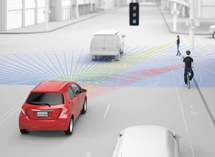
Yes. One example: the fully automated car Uber is testing has 20 cameras and multiple radar sensors to “see” in every direction around the vehicle. The sensor technology includes LIDAR, radar and cameras. This should provide some relief to those who worry that a stray piece of gravel on the highway might knock out a sensor.
Learn More About...
Fully Automated… When?
Fully Automated… When?
A reality check and the automated vehicles that are already on the road.
Learn More
Points to Ponder
Points to Ponder
Safety technologies exist, but attentive drivers still necessary.
Learn MorePublic Perceptions
Public Perceptions
Where we are right now in automation... vs. the future
Learn More